
B''H
With profound joy and gratitude to HaShem, we invite you to celebration in honor of the wedding of our daughter Mussie and Teymi Wolff.
Which will be held in Israel on September 3, 2023 (17 Elul 5783).
The groom's parents
Rabbi Avraham and Chaya Wolf
Odessa, Ukraine
The bride's parents
Rabbi Shmuel and Chanie Kot
Tallinn, Estonia
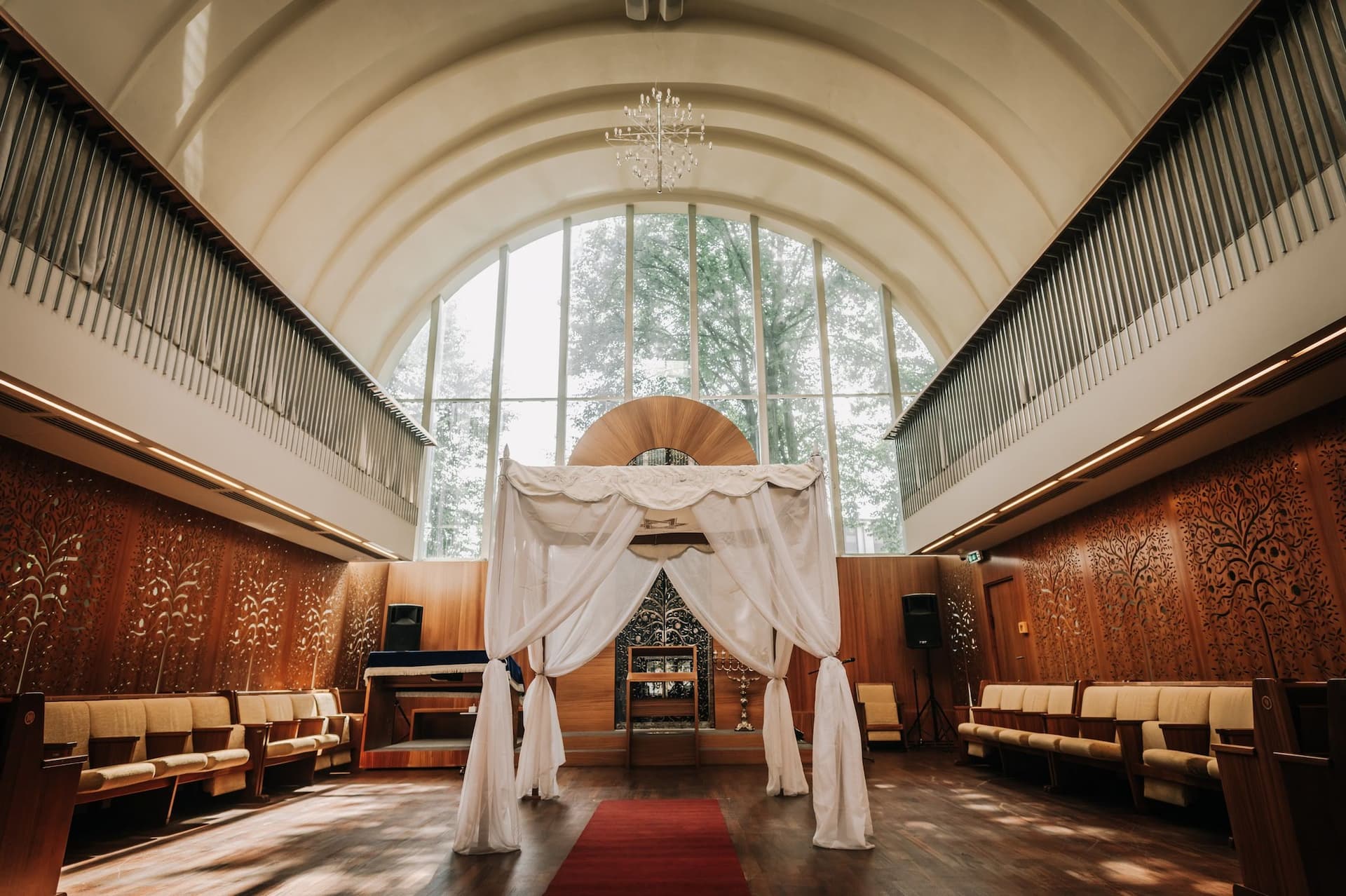
You should wear festive, formal clothes at the chuppah.
Men must have their head covered during the ceremony. A kippah (yarmulke) or other headgear is acceptable.
We will be grateful if women are dressed modestly according to Jewish tradition: without a deep neckline or slits, the sleeves should cover the elbows, and the skirt should cover the knees, the fabric should not be transparent.
Men shake hands with men, women shake hands with women.
The best gift is joyful mood and good wishes to the young couple. Since the newlyweds will leave Israel after the wedding, we ask you not to bring flowers and items, the best gift for the young couple is your attendance and warm wishes. The young couple will appreciate a mitzvah, a good deed done in their honor.
If you wish to give the young couple a gift, they will be very grateful for monetary contributions to help them buy items for their new home.
In Judaism, the engagement is called the Tnoim, which literally means “conditions.” The engagement marks the conclusion of the final marriage arrangement between the bride and groom and their parents. It is customary to confirm this in writing. At the same time, the groom performs the kinyan. It is a symbolic action (raising an item, for example, a handkerchief) that indicates the finality of his decision.
In addition, during the engagement, the share of material participation of parents in the wedding and providing the newlyweds with everything necessary is negotiated. As a rule, also the approximate date of the wedding is set. If the document is not drawn up, all agreements are announced orally.
After the completion and announcement of the Tnoim, the mother of the groom and the mother of the bride break a plate. This custom symbolizes the irreversibility of the decision: just as it is impossible to restore a broken plate to its previous state, also the engagement cannot be reversed. And just like the shards from the plate, the groom becomes separated from all women except his future wife and the bride becomes separated from all men except her future husband.
Before the marriage ceremony, the Ketubah – a description of the duties that the groom takes upon himself in marriage – is drawn up. Also the amount of material "insurance" in the event of the death of the husband or divorce is established.
Before the start of the wedding ceremony, the groom and the bride step under the chuppah — the wedding canopy. The chuppah symbolizes the groom's house into which he will bring the bride.
Under the cover of the chuppah, the rabbi performs the engagement ceremony (Kiddushin). The groom puts a ring on the finger of the bride and thus "acquires" her as his wife. At the same time, he says: "Behold, with this ring you are consecrated to me as a wife according to the laws of Moses and Israel." From this moment on, the bride is "separated" from all other men and is belongs only to her husband and is "dedicated" to him.
Then the Ketubah — the contract outlining the obligations of the groom towards the bride – is read out aloud.
It is followed by the reading aloud of the Sheva Brachot — seven wedding blessings.
At the end of the ceremony, the groom breaks a glass, because even in the most joyful moments of life, we must not forget the destruction of the Temple and the centuries of exile. After the chuppah, the bride and groom retire for a short time to a special room (Header Yehud). Then the guests sit down at the dinner table.